
Template · Transaction coordinator careers, pay and licensing
Pricing a TC business: a cost-per-file model with every input published
A spreadsheet that prices a closed file from your own hours, pay, benefits, self-employment tax, E&O, software, overhead, dead files and margin, with every default dated and sourced. On those defaults a solo coordinator opening 15 files a month needs $378 a closed file, and hours per file moves that number more than everything else put together.
When should you price from costs instead of the market?
Published US rate cards run $300 to $550 for one side of a file, and more of them pick $400 than any other number. That is what the market asks for. It says nothing about what the file costs you, and the two coordinators charging $400 can have very different businesses underneath.
Run the sheet in three situations. You are setting a first card and want a floor you can defend. You are thinking about a raise and an agent is going to ask why. Or you are busy, your card is at the market median, and the bank balance says something is wrong. In each case the output either lands inside the band, which tells you the card is fine and the problem is elsewhere, or it lands above it, which tells you where the hours are going.
What goes into the sheet?
Fifteen inputs, each on its own row, each one you can overwrite. The demonstration values are the ones the rest of this page uses. Eight of them are published figures with a date. The other seven are assumptions and say so.
The fifteen inputs, with the demonstration values and where each comes from
| Input | Demonstration value | Where it comes from |
|---|---|---|
| Files you open a month | 15 | Your own number. Assumption here. |
| Share of contracts that terminate | 7% | NAR REALTORS Confidence Index, September 2026. |
| Hours of your work per closed file | 6 | Assumption. ListedKit: 3 to 6 clean, 8 to 15 complex. |
| Hours spent on a file that dies | 3 | Assumption: half a closed file. |
| Hours a month not tied to any file | 20 | Assumption: marketing, bookkeeping, invoicing. |
| Hourly wage you pay yourself | $25.22 | BLS, office and administrative support wages, June 2026. |
| Benefits you fund yourself, per hour worked | $8.93 | BLS: paid leave $2.77, supplemental pay $1.06, insurance $4.05, retirement $1.05. |
| Self-employment tax rate | 15.3% | IRS Topic 554: 12.4% Social Security, 2.9% Medicare. |
| Share of net earnings it applies to | 92.35% | IRS Topic 554. |
| E&O premium a year | $708 | Insureon median for real estate agents and brokers, $1M/$1M. |
| Software per file opened | $20 | DeedSpring Standard at 10 to 19 closings a month. ListedKit $14.99 a setup. Paperless Pipeline $69 a month for 5. |
| Other fixed overhead a year | $1,200 | Assumption from Paperless Pipeline's startup table: license, website, accounting, plus a phone. |
| Payment processing, share of revenue | 1% | Joy in Chaos passes through 1% ACH and 2.99% card. Enter 0 if you do too. |
| Profit margin, share of revenue | 10% | Assumption. Your cushion for slow months. |
| Fee you still collect on a dead file | $0 | No close, no fee. Enter your deposit if you keep one. |
What do you pay yourself, and what do you owe on it?
Start from what an employer would spend on you. Private employers paid office and administrative support staff $25.22 an hour in wages in June 2026 and another $11.51 an hour in benefits: $2.77 of paid leave, $1.06 of supplemental pay, $4.05 of insurance, $1.05 of retirement and $2.58 of legally required benefits. The sheet takes the wage as your hourly rate and the first four benefit lines, $8.93 an hour, as the benefits you now fund yourself. That is a 35% markup on the wage. Set it to zero and you are pricing a job with no health cover, no retirement and no paid week off.
The legally required line is replaced by self-employment tax: 15.3%, which is 12.4% for Social Security and 2.9% for Medicare, charged on 92.35% of your net earnings. You deduct half of it for income tax, which the sheet leaves to you and your accountant. The Social Security portion stops at $184,500 of earnings in 2026 and $192,300 in 2027, far above anything in this model, so the sheet applies the full rate.
If you hire, swap the tax line for the employer build-up: 7.65% employer FICA, federal unemployment at 0.6% of the first $7,000, your state's unemployment rate and workers compensation. Jamil Academy's employer build-up walks through those rates on the same BLS benefits figure and lands at about 44% on top of base pay for an in-house coordinator on private-industry terms.
How many hours does a file take, and how many files die?
Nobody has measured coordinator hours per file. The published figures all come from companies selling coordination or software, and they disagree. ListedKit puts active work at 3 to 6 hours on a clean deal and 8 to 15 on a complex one. The demonstration uses 6, the top of the clean range, and 3 for a file that dies on the assumption that it dies around inspection. Log your own for two weeks before you trust either number.
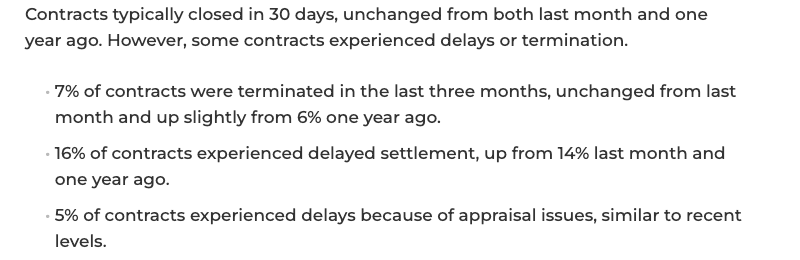
Dead files are a cost, not a rounding error, because you do the first half of the work and bill nothing. The sheet needs a rate. NAR's REALTORS Confidence Index for September 2026 puts contracts terminated in the previous three months at 7%, flat on August and up from 6% a year earlier, from 1,701 members surveyed in the first nine days of October. That is every contract its members wrote rather than files a coordinator ran, so overwrite it with your own cancellation count once you have one.
What does the business itself cost?
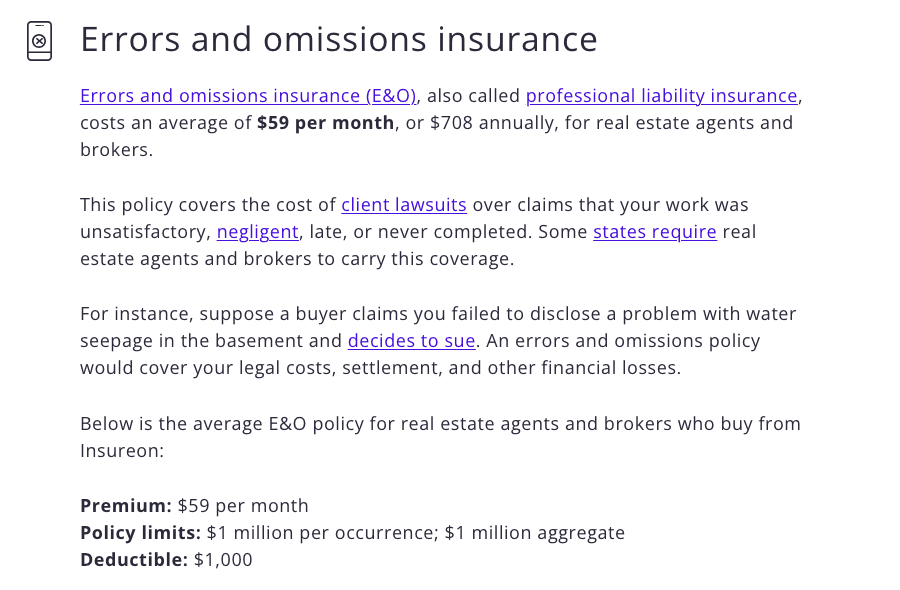
Three lines. Insurance first: Insureon's median E&O policy for real estate agents and brokers is $59 a month, $708 a year, for $1 million per occurrence and $1 million aggregate with a $1,000 deductible. No insurer publishes a coordinator-specific premium, and across all small businesses Insureon's customers pay anywhere from about $400 to over $7,000 a year, so get a quote and overwrite the default.
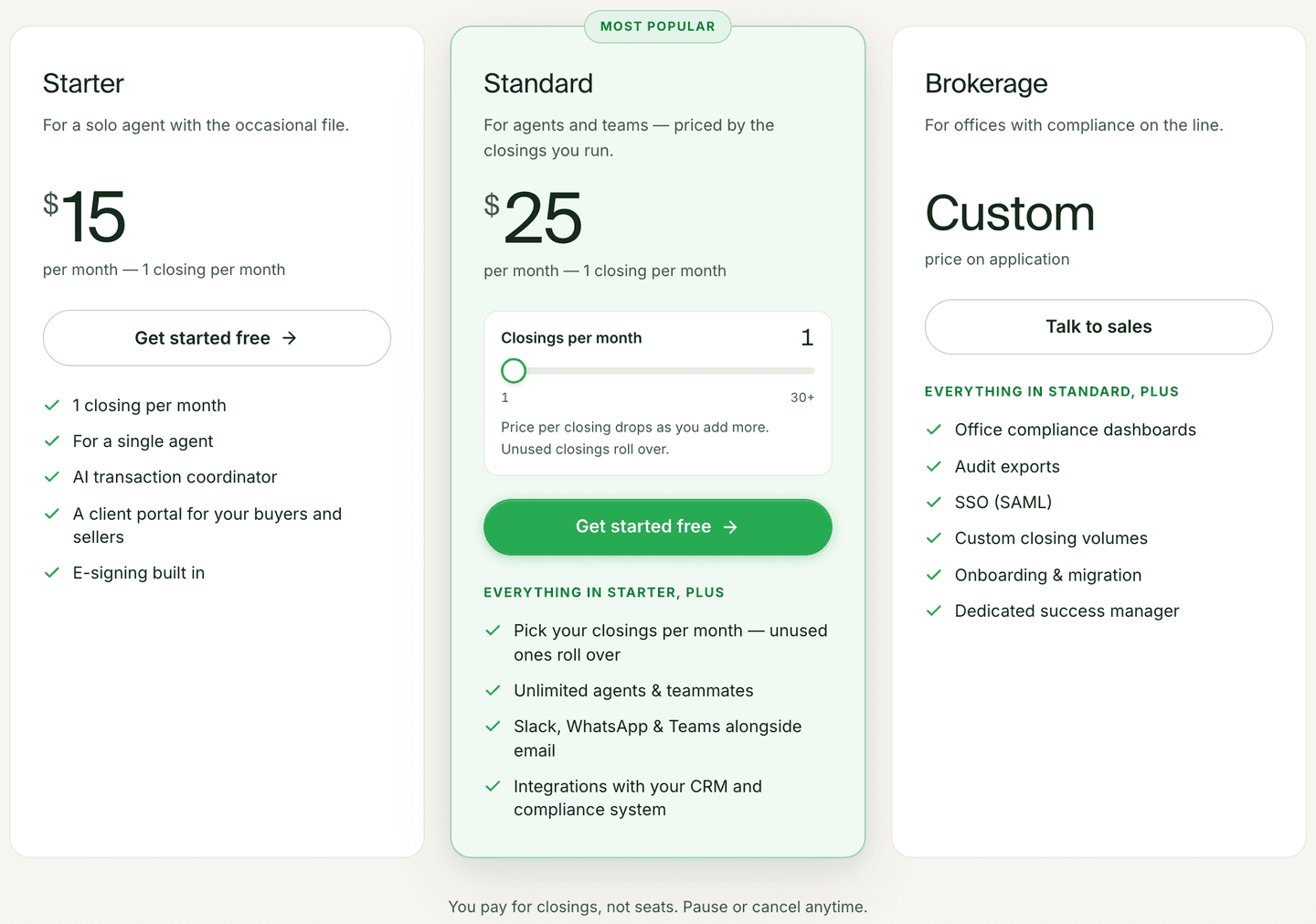
Software second, priced per file opened because a file that dies still had to be set up.DeedSpring is $15 a month for one closing, or $25 a closing on Standard at one to four closings a month, $22 at five to nine, $20 at ten to nineteen and $19 at twenty or more, with unused closings rolling over and no per-seat fee. The demonstration runs 15 files a month, so it uses $20. ListedKit charges $14.99 per contract setup, down to $11 in bulk. Paperless Pipeline is $69 a month for up to five new transactions, so divide its tier by your volume. The software line is small next to the hours line.
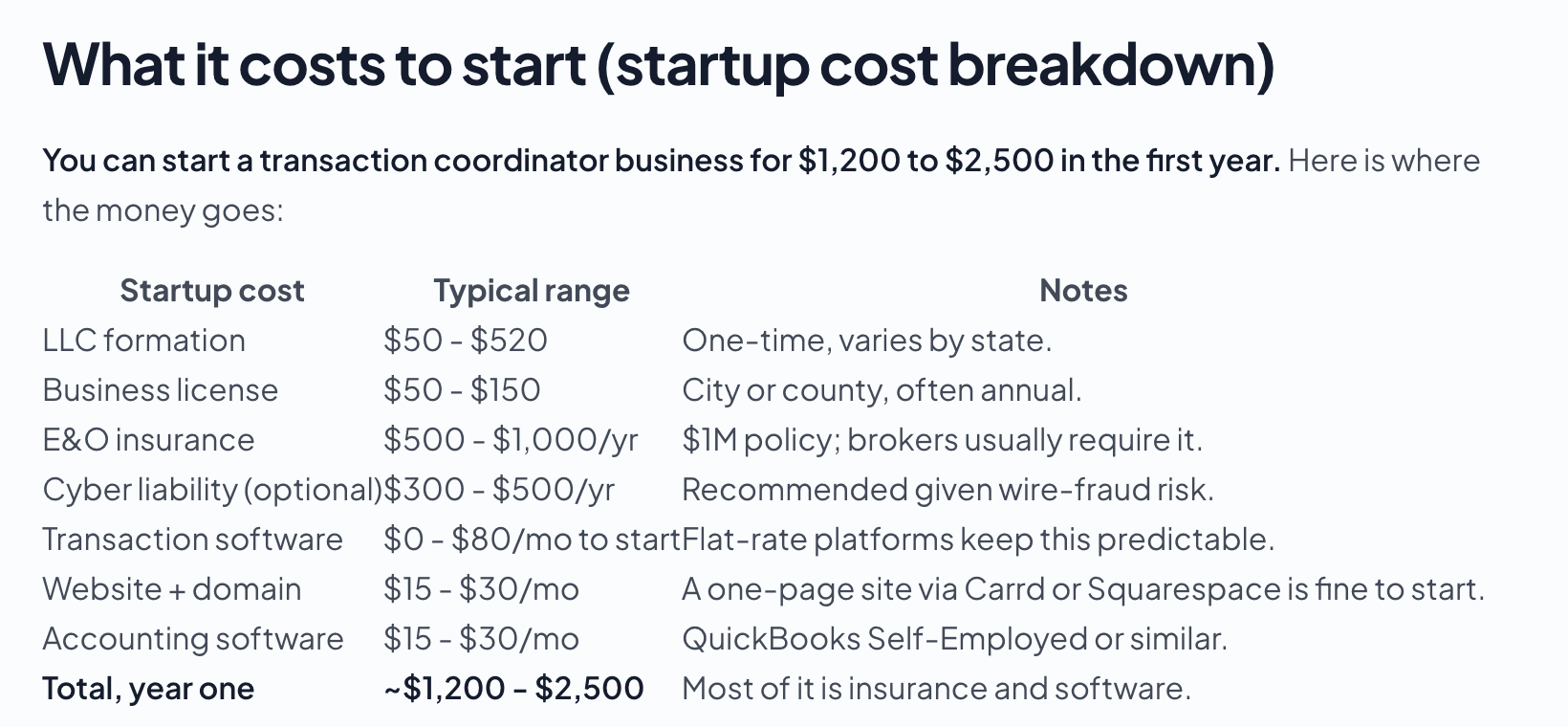
Everything else third. Paperless Pipeline's startup table lists what a new TC business pays before the first file closes: an LLC at $50 to $520, a business license at $50 to $150, a website at $15 to $30 a month, accounting software at $15 to $30 a month, and E&O at $500 to $1,000 a year, which agrees with Insureon. The demonstration rolls the license, website, accounting and a phone line into $1,200 a year. Payment processing scales with revenue: Joy in Chaos Transactions passes through 1% on ACH and 2.99% on cards, and the demonstration absorbs 1%.
What does the demonstration run come to?
Demonstration data, on the fifteen defaults above. Every figure is the sheet's own arithmetic and you can follow it row by row.
Step 1: Count the files
15 a month is 180 opened a year. At a 7% termination rate, 167.4 close and 12.6 die. You invoice the 167.4.
Step 2: Count the hours
167.4 closed files at 6 hours is 1,004 hours. 12.6 dead files at 3 hours is 38. Twenty untied hours a month is 240. Total 1,282 hours, which is 26.7 hours a week over 48 working weeks.
Step 3: Pay yourself
1,282 hours at $25.22 is $32,337 of pay. The same hours at $8.93 is $11,450 of self-funded benefits.
Step 4: Add the fixed costs
E&O $708. Software $20 on each of 180 files opened, $3,600. Other overhead $1,200. Fixed costs $5,508.
Step 5: Gross up for tax, processing and margin
Self-employment tax falls on pay, benefits and margin at an effective 14.13%. Processing takes 1% of revenue and margin 10%. Solving for revenue gives $63,345, of which $7,082 is self-employment tax, $633 is processing and $6,335 is margin.
Step 6: Divide by closed files
$63,345 over 167.4 closed files is $378.41. Call the card $380. Of that, $299 a file is yours before income tax: $193 of pay, $68 of benefits and $38 of margin. The rest is tax, insurance, software and overhead.
Which input moves the price?
Hours. Hold everything else and move hours per closed file from 4.5 to 12, with dead-file hours at half, and the price goes from $309 to $655. Nothing else comes close. Termination from 0% to 15% moves it from $361 to $401. Zeroing the benefits line drops it to $289, which is how a $300 card exists: it is a wage with nothing behind it. Zeroing the margin gives $335. Swapping the software line between $14.99 and $25 a file moves the price by $12.
Volume cuts the other way. At 8 files a month the sheet asks $448 a file for a 17-hour week. At 25 it asks $346 for a 41-hour week, with software at $19. A busier coordinator can undercut you and still take home more. The check on all of this is what coordinators report taking home. One former coordinator put it this way in July 2025:
“I would call it $300 per file. After taxes and expenses you keep around $200 per file.”
The sheet reproduces that. With benefits and margin at zero, a $300 file keeps about $230 before income tax and about $200 after a modest one. Everything between that card and the demonstration's $378 is health insurance, retirement, paid leave, a cushion and the tax on them. Decide which of those you are selling without.
How do you run it?
Copy the block below and paste it into cell A1 of a blank Google Sheet or Excel workbook. It lands as two columns, the formulas evaluate, and B29 shows the price. Overwrite rows 2 to 16 with your own numbers. Nothing below row 17 needs touching.
TemplateTC cost-per-file model
Paste at A1. Column B holds the inputs in rows 2 to 16 and the formulas from row 18. The values shown are the demonstration defaults. Replace every one.
Input	Value
Files you open per month	15
Share of contracts that terminate	0.07
Hours of your work per closed file	6
Hours spent on a file that dies	3
Hours a month not tied to any file	20
Hourly wage you pay yourself	25.22
Benefits you fund yourself per hour worked	8.93
Self-employment tax rate	0.153
Share of net earnings subject to SE tax	0.9235
E&O insurance premium per year	708
Software cost per file opened	20
Other fixed overhead per year	1200
Payment processing as a share of revenue	0.01
Profit margin as a share of revenue	0.10
Fee you still collect on a file that dies	0
Calculation	Formula
Files opened per year	=B2*12
Files closed per year	=B18*(1-B3)
Files that die per year	=B18-B19
Hours worked per year	=B19*B4+B20*B5+B6*12
Hours per week over 48 weeks	=B21/48
Your pay for the year	=B21*B7
Your self-funded benefits	=B21*B8
Effective SE tax rate	=B9*B10
Fixed costs	=B11+B12*B18+B13
Revenue needed	=(B26+(B23+B24)*(1+B25))/(1-B14-B15*(1+B25))
Dead-file fees collected	=B20*B16
Price per closed file	=(B27-B28)/B19
What you keep per closed file before income tax	=(B23+B24+B15*B27)/B19
Then check it three ways before you quote anyone. First, read B22: if the hours a week are not the week you want, the card and the volume are inconsistent and the sheet is telling you which to change. Second, recompute B29 by hand once, pay plus benefits plus fixed costs, grossed up and divided by closed files, to make sure a pasted formula did not shift a row. Third, hold the output against the published band of $300 to $550. Inside it, your card is the market's card and you are competing on service. Above it, go back to row 4 and log your hours, because that is the only row that can bring it down without taking something from you.