
Explainer · Transaction coordinator operations
What is a real estate transaction coordinator? What a TC does, costs and can't do
A transaction coordinator runs a deal's paperwork and deadlines from signed contract to closing while the agent keeps the client and the negotiation. Here is who does what, where regulators draw the line for an unlicensed TC, and what one costs: $300 to $550 a file, $25 to $65 an hour, or a salary.
What does a transaction coordinator do?
The job starts when the contract is signed and ends once the closed file is complete. In between, the TC does the administrative work that keeps the deal on schedule. Oregon's Real Estate Commissioner borrows a description from the Association of Corporate Counsel. A TC helps brokers with tasks such as scheduling inspections, coordinating repairs and tracking the progress of a transaction. The TC may also keep the records and talk to buyers, sellers, agents and escrow companies so that deadlines are met.
Oregon law does not define the title. The same column says the TC does not exist in statute or rule, so the agency judges the role by the activity performed.
Published service agreements show the split with the agent better than any definition. CTC Transaction Coordinators prints two lists on its pricing page: what the TC does on every file and what the agent agrees to keep. Contract To Close TC does the same. The table sets the two columns side by side.
Who does what from signed contract to closing, on two published TC agreements
| Stage | The TC | The agent |
|---|---|---|
| Contract is signed | Reviews the contract for completeness, chases missing signatures and dates, and sends it to lender and title. | Negotiated the offer and any counteroffers. Explains the contract to the client. |
| Earnest money | Confirms the deposit and gets the receipt. | Handles the buyer's deposit. |
| Deadlines | Keeps the calendar and alerts the agent to contingency dates coming up. | Tells the TC about any amendment. Negotiates any change or extension. |
| Inspection and repairs | Schedules the home inspection if asked. Makes sure inspection repairs are completed. | Reviews the inspection reports. Negotiates the repairs. |
| Lender, title and HOA | Orders title, confirms the appraisal is ordered, follows up with the lender and makes sure HOA documents arrive. | Reviews the preliminary title report. |
| Brokerage file | Submits the paperwork to the brokerage and uploads documents to its compliance platform. | Gives the TC access to the transaction system. |
| Closing | Coordinates the final walkthrough and schedules closing. Afterward, checks the file is complete. | Reviews the final settlement statement with the client. |
The TC's column is dates and documents. The agent's column is advice and negotiation. CTC says its full checklists run to 86 items on a buyer file and 90 on a seller file. For a working list, see our transaction coordinator checklist.
What can't a transaction coordinator do?
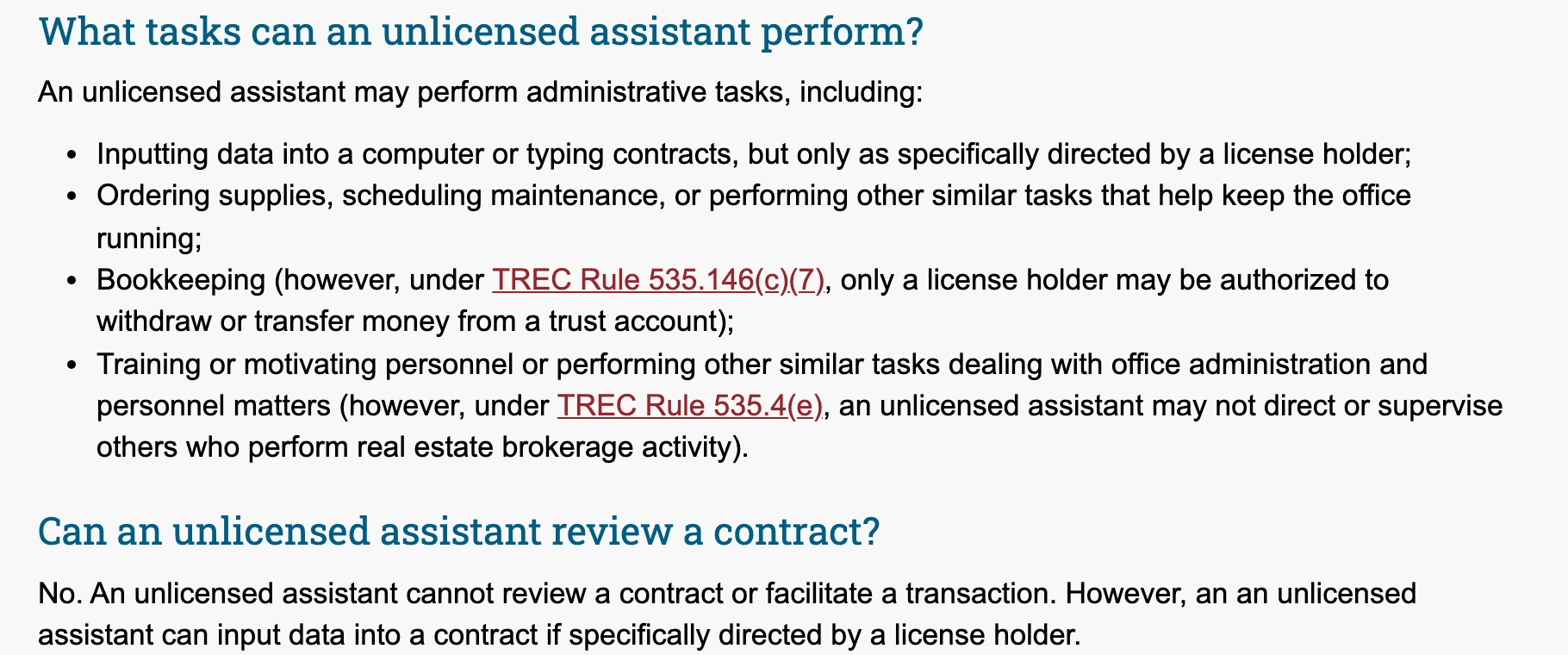
That depends on whether the TC holds a real estate license. The Texas Real Estate Commission says so directly. It lists transaction coordinator among the popular titles for an assistant and says license status determines what the person can legally do. An unlicensed assistant can enter data into a contract when a license holder specifically directs it. An unlicensed assistant cannot review a contract or facilitate a transaction.
The penalty lands on both sides. Brokerage activity without a license is a Class A misdemeanor in Texas, for the unlicensed person and for the broker or sales agent who employs them. That means a fine of up to $4,000, up to a year in jail, or both.
North Carolina publishes two lists. The Real Estate Commission's bulletin on unlicensed assistants lets them help a broker compile documents for closing, type contract forms with information a broker provides and schedule showing appointments. Only a licensed broker may discuss or explain offers and agency agreements with people outside the firm, or negotiate contract provisions. The Commission's rule comments carry a similar list with a pay condition. It applies so long as the assistant is salaried or hourly paid and is not paid on a per-transaction basis.
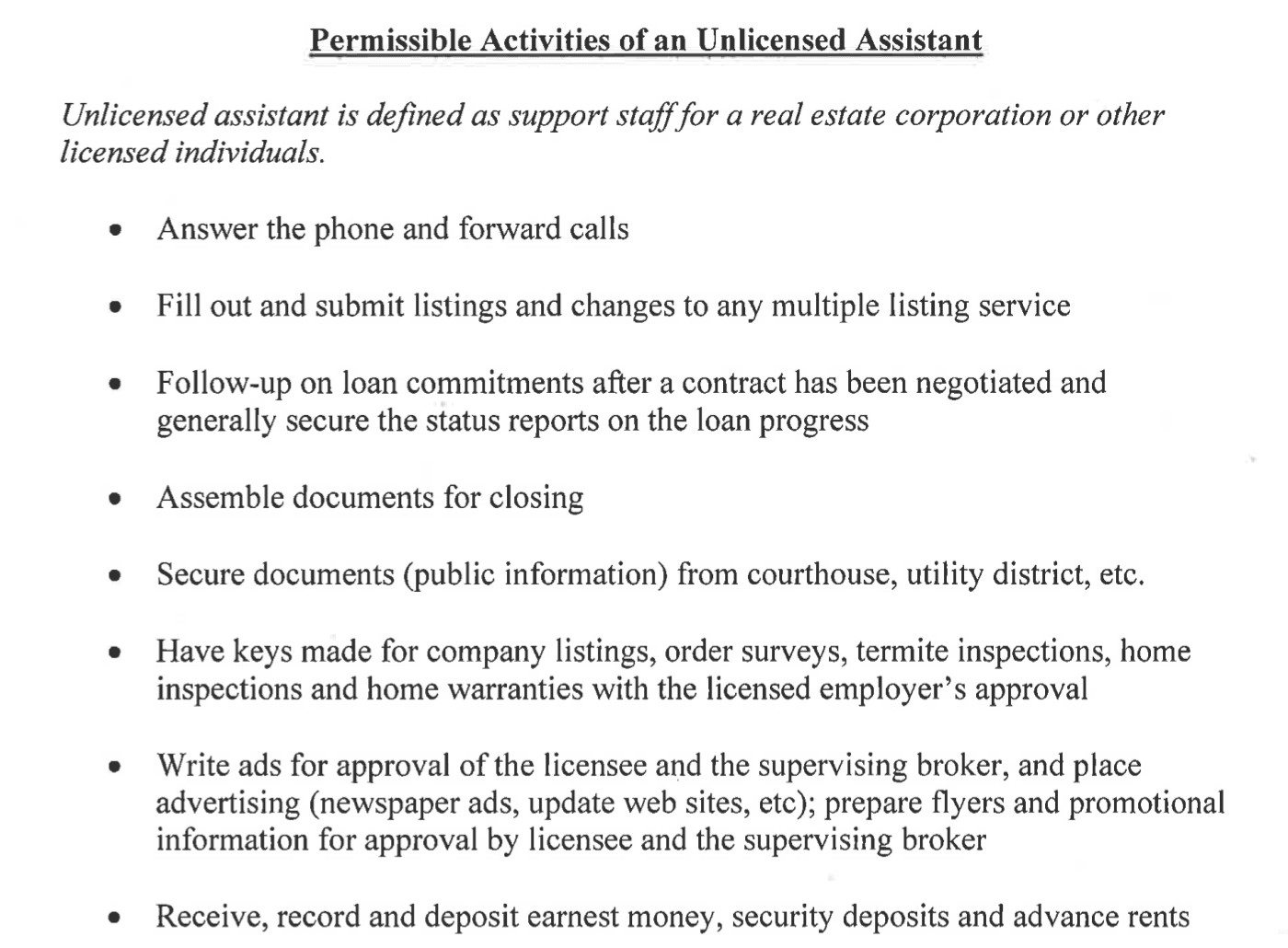
Florida publishes a permitted list only, approved by its Real Estate Commission in September 2009. An unlicensed assistant may follow up on loan commitments once a contract has been negotiated, assemble documents for closing, and order surveys and inspections with the licensed employer's approval. On contracts the wording is narrow: only type the forms, for approval by the licensee and supervising broker.
CTC's list has the TC reviewing the contract for completeness. In Texas, TREC says an unlicensed assistant cannot review a contract. So the first thing to ask any TC is whether they hold a license in your state.
Our state pages for Texas, Florida and North Carolina cover each state's contract and closing. For the rest, see what 19 state regulators allow an unlicensed TC to do.
How much does a transaction coordinator cost?
There are three ways to pay. Per file is the norm for freelance TCs and TC companies. On the 21 published US rate cards we read, one side of a deal cost $300 to $550, and $400 was the most common price. Notable Transactions charges $300, Quill $350, CTC $400 and Transactly $399 on its pay-as-you-go plan. Notable, Quill and CTC collect at closing, and 13 of the 21 cards waive the fee if the deal falls through. Check the small print: CTC keeps a $50 submission fee either way.
Quill's cost guide puts hourly TC rates at $25 to $65, and offshore rates at $8 to $20. Hourly TCs bill for time worked, often in 15-minute increments.
A team or brokerage with an in-house TC pays a salary. Indeed's average base salary for the title is $58,498 a year, based on 679 salaries from job postings. That page pools other jobs that share the title, and our article on what a TC really earns separates them.
DeedSpring is a transaction coordination service that costs less than every card above. Send us the signed contract and we run the file to closing, in every state. The first transaction is free. After that it is $100 per closing, flat, paid at closing, and nothing if the deal doesn't close.
When should you bring in a transaction coordinator?
Volume is the wrong test, because a per-file TC with no monthly minimum costs nothing between deals. The typical agent in the National Association of Realtors' 2026 Member Profile reported nine transaction sides in 2025. At $400 a file that is $3,600 a year, collected at closing.
The better test is where your hours go. TC Track, which sells TC software, estimates that a clean file takes 8 to 12 hours of coordination across its life and a messy one takes 20. If those hours are coming out of prospecting or time with clients, hand over the next file.
Hiring in-house is a different sum. At Indeed's average, a salaried TC costs what about 146 files cost at $400 each, before payroll taxes and benefits. Below that volume the per-file bill is smaller.
Hand the file over the day the contract is signed. CTC's agreement runs from the signed listing agreement or contract to the closing table, and Contract To Close TC starts its escrow work on receipt of a signed purchase agreement.
What are your options for getting one?
Five. What separates them is what you pay and what you owe when a deal dies.
Five ways to get transaction coordination, and what each costs
| Option | What you pay | If the deal doesn't close |
|---|---|---|
| In-house TC | A salary. Indeed's average base for the title is $58,498 a year. | The salary is paid either way. |
| Freelance TC | Per file. $300 to $550 a side on published rate cards. | 13 of the 21 cards we read waive the fee. |
| TC company | Per file. Notable $300, Quill $350, CTC $400. | Notable and Quill charge nothing. CTC keeps $50. |
| Hourly TC or virtual assistant | By the hour. $25 to $65 on Quill's figures, or $8 to $20 offshore. | Hours already worked are billed. |
| TC service (DeedSpring) | $100 per closing, flat. First transaction free. | Nothing. |
Any per-file option is easy to try, since you can send one file. Ask what you owe if the deal dies, who talks to your client, and whether both sides of one deal are one fee or two.
A virtual assistant covers the widest job. The National Association of Realtors' page on personal assistants lists coordinating transactions with clients, lenders and inspectors among the work assistants take on. In Texas, TREC's test still applies: the license decides, whatever the title.