
Comparison · Software comparisons and alternatives
Follow Up Boss vs Lofty: lead routing, AI and the transaction handoff
Follow Up Boss is a CRM with a published price that expects you to bring your website and lead sources. Lofty bundles the website, the ads and the AI and sells by quote. Here is who should buy which, how each routes a lead, and what both do once the contract is signed.
Which one should you buy?
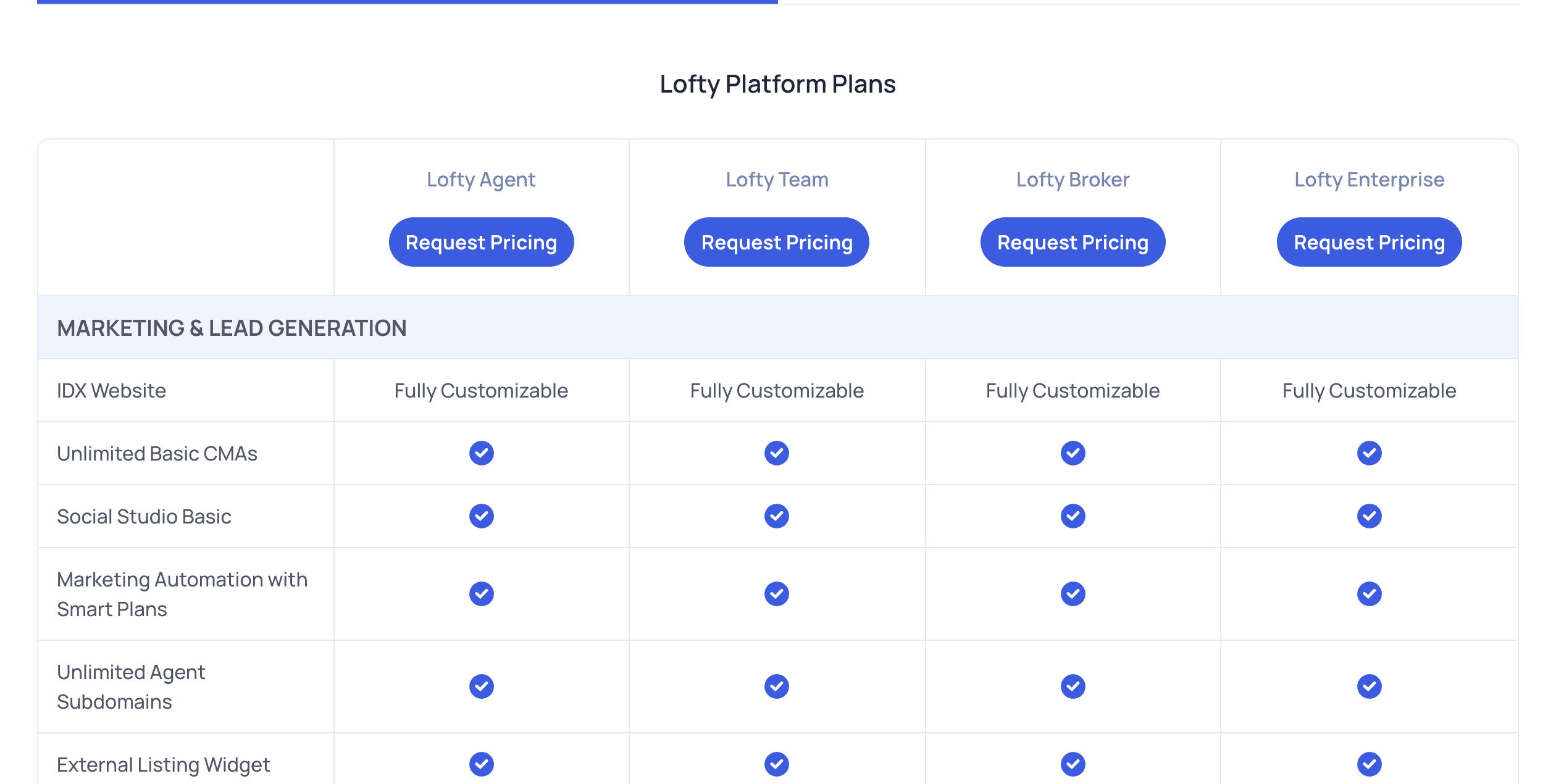
Follow Up Boss sells itself as the open option. Its pricing page leads with “Connect any lead source and website” and its platform page puts the case in four words: “All-in-one? Master of none.” You pay per user, the price is on the page, and the trial is 14 days with no contract. Lofty sells the opposite. Every one of its four plans comes with a customizable IDX website, managed ad campaigns are an add-on on every plan, and the AI assistant that qualifies those leads arrives with the ad package. None of the four plans has a price on the page. The pricing page says only that the number depends on your package, seat count, upgrades and lead-gen programs.
“I personally use and suggest Follow Up Boss. Before that, I was a Lofty user. I will say if you want a ton of AI capabilities and website/blog, you might consider Lofty.”
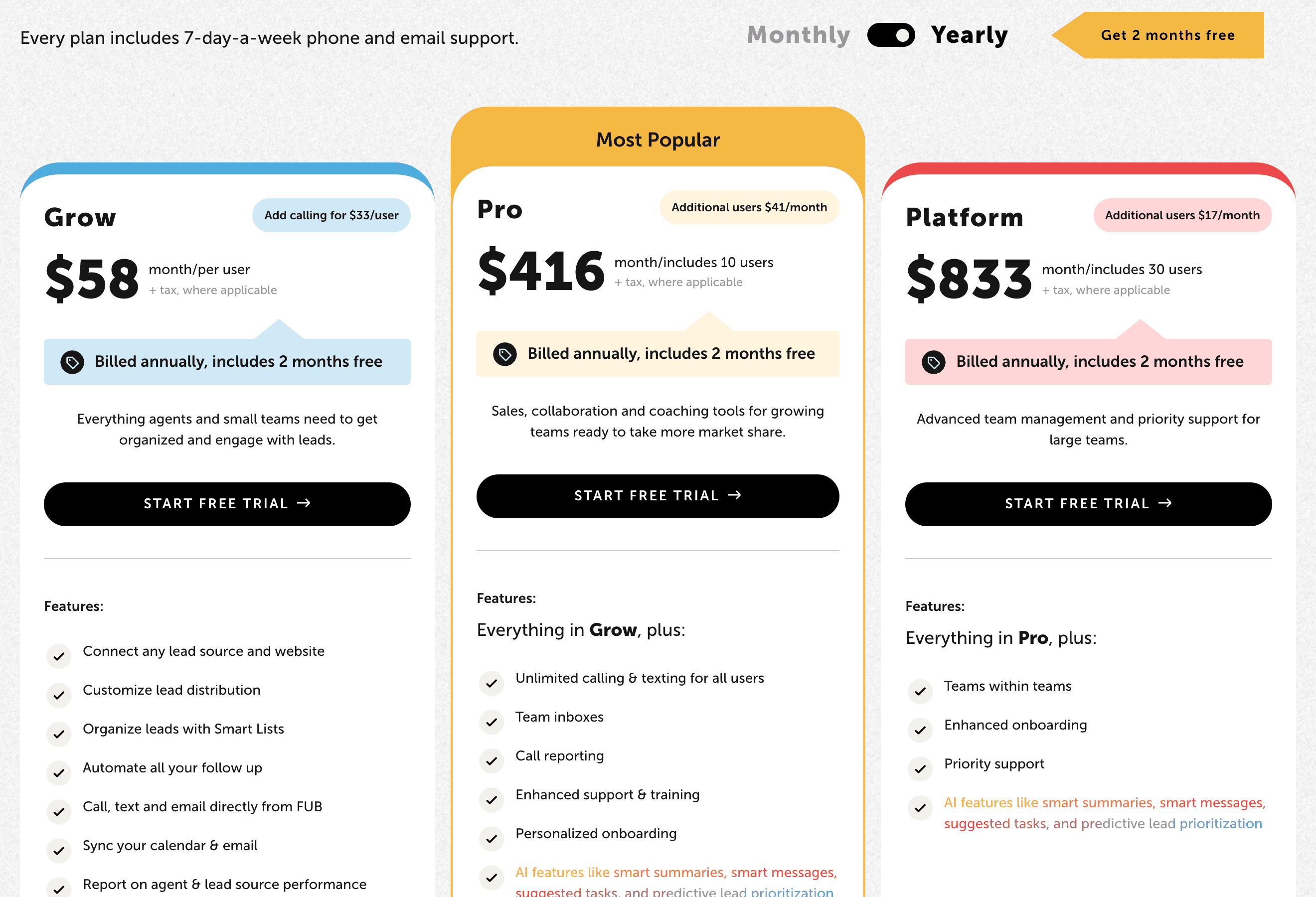
So the pick. A team of five or fewer that already runs a website and buys leads from a portal or two should take Follow Up Boss Grow at $69 a user a month and keep its lead sources. A team that wants one bill for the website, the ad spend and the CRM, and has the patience for a sales call, should ask Lofty for its number and get the lead-gen minimums in writing first. The buyer and seller ad packages carry a $600 monthly minimum budget with a 20 percent management fee on top. A brokerage that needs offices and sub-teams is comparing Follow Up Boss Platform at $1,000 a month for thirty users with a Lofty Broker or Enterprise quote, because Teams in Follow Up Boss exist only on Platform.
Side by side
DeedSpring, Follow Up Boss and Lofty on price, the record after contract, and who does the chasing
| DeedSpring | Follow Up Boss | Lofty | |
|---|---|---|---|
| Published price | Starter $15 a month for one closing. Standard $25 a closing, less at volume. | Grow $69 a user. Pro $499 for ten users. Platform $1,000 for thirty. Monthly. | None. Four plans, each marked Request Pricing. |
| What you pay per | Closing. Unlimited agents and teammates on Standard. | User, or a block of users with extra seats on top. | Package, seat count, upgrades and lead-gen programs, by quote. |
| The job it does | Runs the file from executed contract to close. | Lead follow-up CRM. You connect the website and the lead sources. | CRM, IDX website, managed ads and AI in one platform. |
| The record after contract | A closing: milestones, dated tasks, the contract's key terms, documents. | A deal: name, price, projected close date, contacts, commission, splits. For reporting. | A transaction inside the lead profile, primarily for reporting and reminders. |
| Dates from the contract | The coordinator reads the executed contract and sets the deadlines. | You type the projected closing date on the deal. | You fill in the key dates. They flow to calendar and tasks. |
| Checklists | Playbooks per closing type. Tasks timed from the contract date, each with an owner. | Stages, dragged between columns, tracked for reporting. | Up to ten checklist templates, applied by hand to each transaction. |
| Messages to parties | The coordinator drafts, you approve by default. Sensitive content is always a draft. | Call, text and email from the CRM, by you or by action plans. | Email, mass and auto texting, Smart Plans from the CRM. |
| Hands off to | Connectors named for Follow Up Boss and for Lofty. | Dotloop into Follow Up Boss, one way, every five minutes. | Send to Dotloop. Details only to SkySlope, no documents. |
Do you bring your own leads, or buy them bundled?
This is the decision the rest follows from. Follow Up Boss has no website product and no ad product. The Grow card's first feature line is connecting your own lead source and website, the compare table lists IDX websites and over 200 lead sources and apps as integrations, and the platform page counts 250 of them with an open API. If you already pay a portal for leads, a website vendor for the IDX site and an agency for the ads, Follow Up Boss is the hub they all post into and you change nothing else.
Lofty puts the IDX website in every plan column and sells the ads itself. Its lead generation page quotes a minimum budget of $600 a month for the buyer and seller packages, a management fee of 20 percent, and a flat $150 a month when the budget is under $750, and the Lofty AI Assistant for automated lead qualification comes with the package. That bundle is the point of Lofty. It is also why there is no price on the page: the website, the seats and the ad spend are quoted together.
How does each one route a new lead?
Follow Up Boss routes by lead source. For each source you choose who gets the lead, which lender is attached and which action plan starts, and advanced rules can split a source by tags, price, city, state, zip code, MLS number or phone number. A source can point at a group instead of a person, and a group distributes either Round Robin or First to Claim. First to Claim pushes the lead to every agent in the group through the mobile app only, and “The maximum time for leads to remain unclaimed is 30 minutes” before it falls to a fallback group and finally to the account owner.
Lofty routes by a list of rules read top to bottom with a default rule at the end. Each rule has conditions such as lead source, ZIP code and tags, and one of three methods: Round Robin, Next Up or Blast Alert. Rules skip anyone outside their working hours or with Vacation Mode switched on, and if nobody in a rule is working, the next rule takes the lead. Rules live at three levels, Personal, Office/Team and Company, and the Enterprise edition adds permissions for who may manage routing for the whole company or only their own office. An admin who sets every lead to company-owned keeps them out of the office and personal rules altogether.
What does a team or brokerage structure cost you?
In Follow Up Boss the structure is priced. Every plan has Account Owner, Admin, Agent and Lender roles. Team Lead, ISA and the account-team roles exist only on Platform accounts, and Teams themselves are a feature of the Platform plan. A Team Lead can view, create and edit their own team's deals, and anyone below admin sees only the deals they are part of. The step from Pro at $499 for ten users to Platform at $1,000 for thirty is therefore also the price of having team leads who see their team and nothing else.
In Lofty the structure is in the grid and the price is in the quote. The plan table lists Team Management, Customizable Org Structure, Single Sign-On and White Label as rows, and the Enterprise routing article describes company-wide and office-level permissions for lead distribution, so a multi-office brokerage can be modelled. What that edition costs over Lofty Team is a question for the sales call.
What AI do you actually get today?
Follow Up Boss names four AI features on the Pro and Platform cards and in its plan comparison: smart summaries, smart messages, suggested tasks and predictive lead prioritization. The Grow card says AI features are included, and the footnote says there is no extra charge for them but that many rely on data from FUB Calling, which on Grow is the $39 a user add-on. The Smart Summary help page, updated in April 2026, says the feature is in closed beta and has been “temporarily turned off for all users”. On the trial, ask which of the four is switched on in your account.
Lofty's AI is the pitch, and it is mid-rebuild. Lofty AOS, the Agent Operating System, is rolling out to accounts in stages with no fixed timeline. The switch back to Lofty Classic is temporary, because “Lofty Classic will be retired” once the rollout ends. In AOS, Cowork is the AI workspace and the first page you see when you log in. It runs on credits that each run consumes, and you buy more when they run low. The Lofty AI Assistant that drafts and sends mass texts and emails is a Lofty Marketplace purchase, and it is included when you buy a lead-gen package.
What happens when a lead goes under contract?
In Follow Up Boss the lead gets a deal. There are two default pipelines, Buyers and Sellers, and a deal holds a name, a price, a projected closing date, the contacts, the commission and splits, and the team members on it. Dragging a deal between stages is tracked for reporting, and only the account owner can change the pipelines and their stages. The transaction paperwork stays in Dotloop: the integration is a one-way sync from Dotloop into Follow Up Boss through Realsynch and Zapier, every five minutes, and nothing flows back.
In Lofty the lead gets a transaction, which always lives inside a lead profile. The introduction page says the transaction features are “intended primarily for reporting purposes” and to provide reminder tasks. Checklists are capped at ten templates across all transaction types, they do not auto-apply the way Smart Plans do, and the help page is plain about it: “They must be applied manually”. A document on the transaction has to be downloaded and uploaded wherever it is needed next. The AOS record tracks the deal from contract to close with the key dates flowing to your calendar and tasks, and clients can follow the stage, see documents and e-sign in the Closely app. Lofty's own FAQ asks whether this replaces your transaction coordinator and answers that it is designed to make the coordinator more efficient, “not to replace human judgment”. For the compliance file, Send to Dotloop syncs price, commission and dates both ways, and SkySlope receives transaction details only, with no documents and no two-way sync.
In both, then, the contract is a date you type. Neither reads the executed contract. The reminders in both go to you, and chasing the lender and the title company for what they owe the file is still your job. That is the job DeedSpring does, downstream of whichever CRM you keep, with a connector card named for each of them.
Where does DeedSpring fit?
DeedSpring starts where both CRMs stop. Upload the executed contract and the AI Transaction Coordinator reads the price, deposits, contingencies and dates and sets the deadlines on the closing. Each closing runs a playbook: milestones with tasks timed from the contract or closing date, each with an owner, and DeedSpring says the two default playbooks are written for your state. The coordinator works the tasks assigned to it and chases the parties until an item is confirmed in writing. By default everything it writes is a draft you approve, and money, contract terms and a deadline that moves are always a draft whatever you set. The connector cards include Follow Up Boss and Lofty, so the lead stays in the CRM you picked and the file runs here.
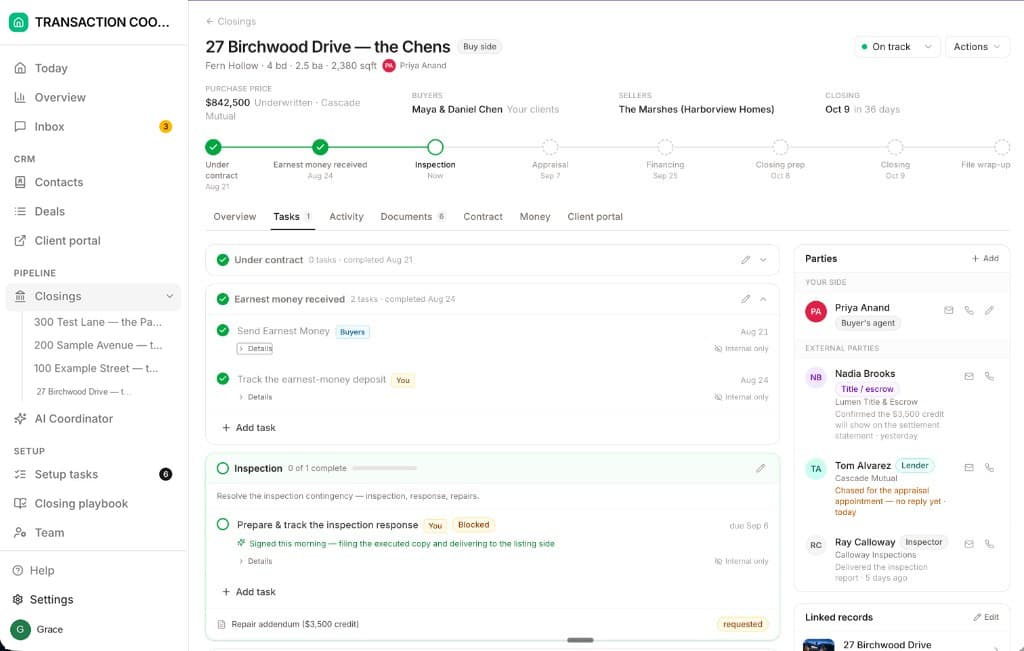
Starter is $15 a month for one closing a month. Standard is $25 a closing, $22 from five a month, $20 from ten and $19 from twenty, with unlimited agents and teammates and unused closings rolling over. Both are month to month. Brokerages above thirty closings a month get a price on application.
How we compared
We read both vendors' pricing pages and their help articles on lead routing, teams, AI features, deals and transactions, and checked every price in October 2026. We compared Follow Up Boss Grow, Pro and Platform with Lofty's four platform plans on what each publishes.