
Explainer · MLS, IDX and listing data
Pending vs Under Contract vs Active Under Contract: what the MLS statuses mean
Pending means an accepted offer with the listing off the market. Active Under Contract means an accepted offer with the listing still on the market. Under Contract and Contingent are local names that can mean either, and here is how nine MLSs use them.
Is Pending the same as Under Contract?
On a RESO feed, yes. RESO's Data Dictionary 2.0, the version MLSs certify against, defines Pending as “An offer has been accepted and the listing is no longer on market.” Active Under Contract is “An offer has been accepted but the listing is still on market.” RESO lists Under Contract and Offer Accepted as synonyms of Pending, and Contingent, Backup Offer and Accepting Backup Offers as synonyms of Active Under Contract.
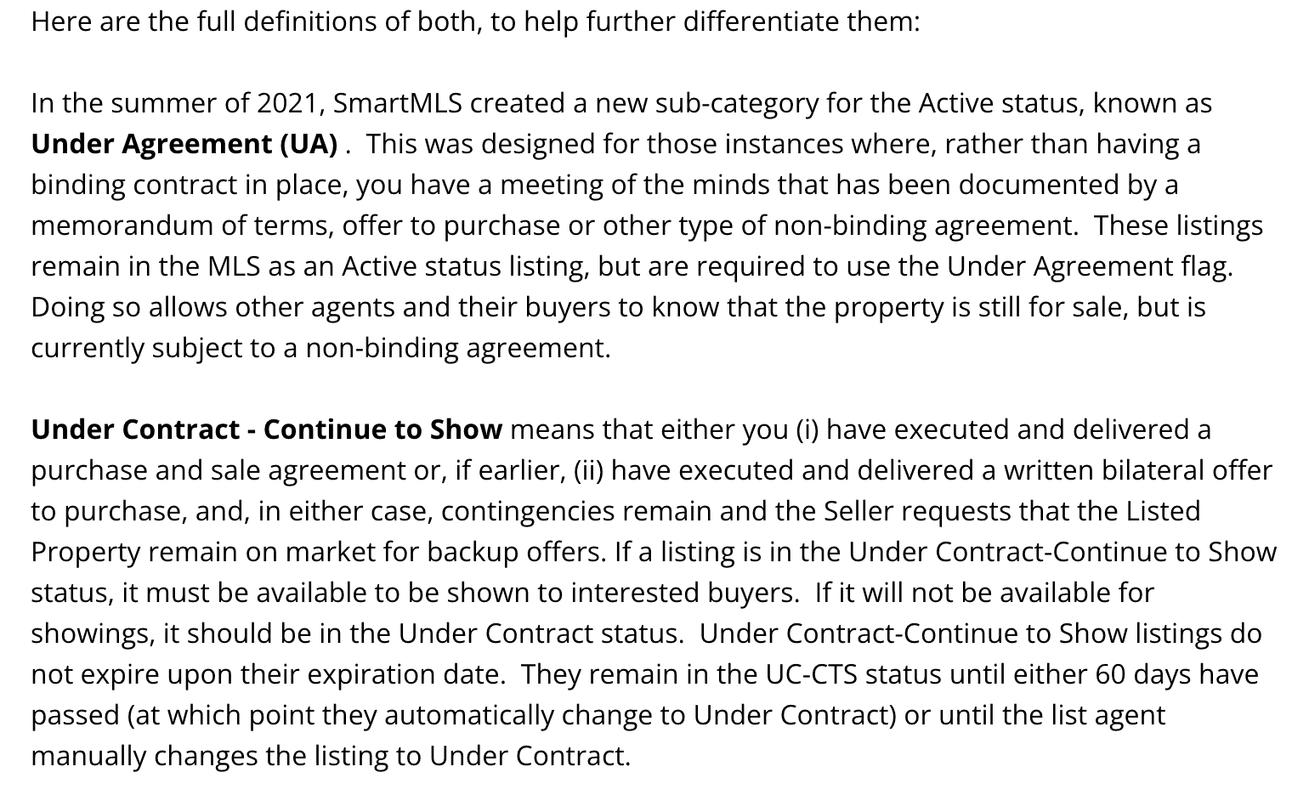
On your MLS sheet, check. Hawaii Information Service follows RESO to the letter: its Under Contract (U) is Pending, its Contingent (C) is Active Under Contract, and U is the one that drops out of IDX. SmartMLS in Connecticut uses the same word the other way round. It has no Pending at all. Its Under Contract (UC) is off market, while Under Contract-Continue to Show (UC-CTS) must stay available to show and converts to UC on its own after 60 days. Arizona's ARMLS lets a listing go to Under Contract-Backups (UCB) instead of Pending when the seller gives written instructions to keep marketing.
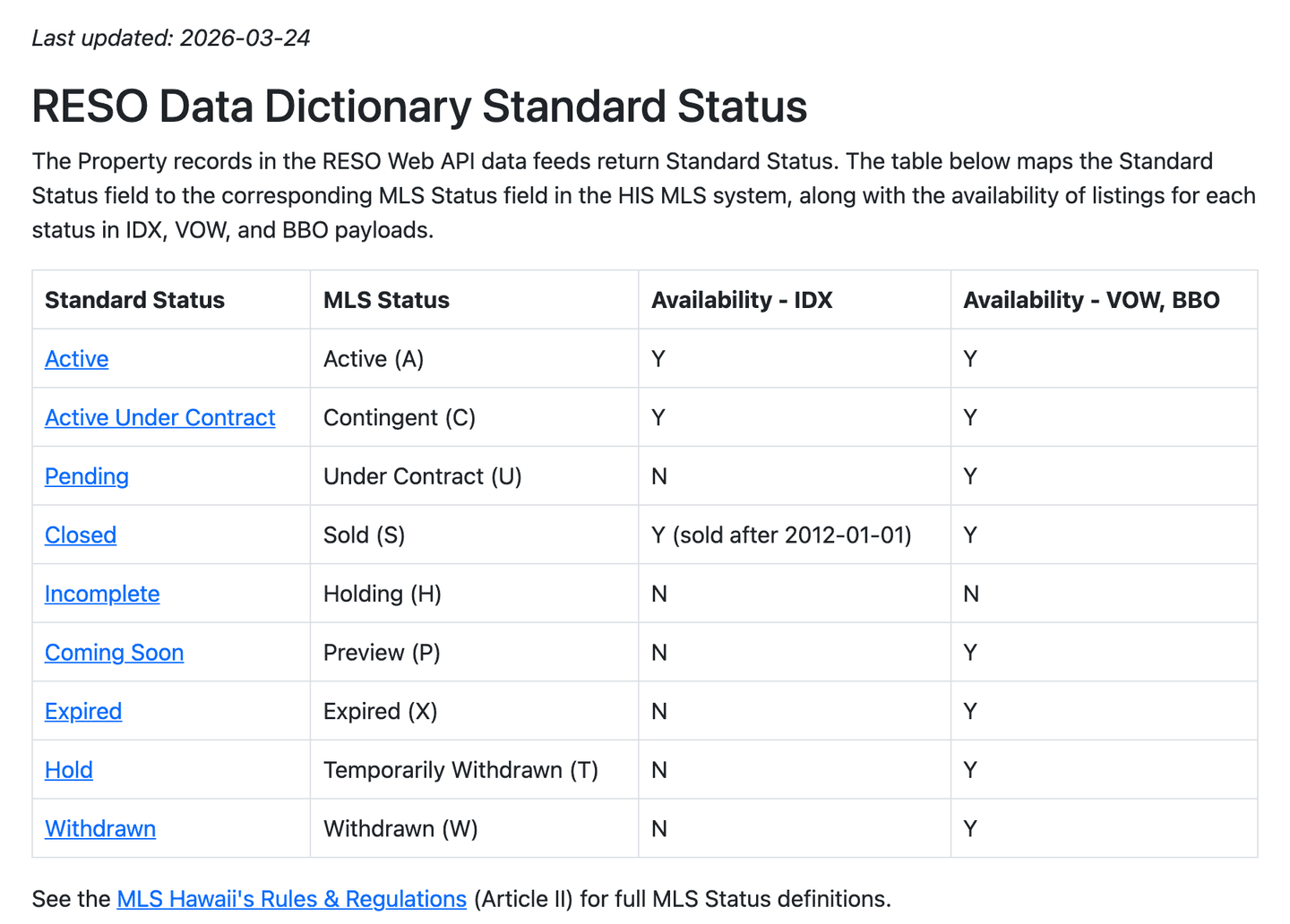
The local name lives in a second field, MlsStatus, and every local value maps to exactly one StandardStatus. Only about half of the organizations RESO counts (54%) use Active Under Contract at all, against 92% for Pending. A feed from an MLS without it puts every accepted offer into Pending, so a Pending on a portal may still be taking back-ups.
What nine MLSs call the three statuses people confuse
| MLS | Offer accepted, still on market | Offer accepted, off market | Paused, listing contract still alive |
|---|---|---|---|
| RESO Data Dictionary 2.0 | Active Under Contract. Synonyms: Contingent, Backup Offer, Accepting Backup Offers. | Pending. Synonyms: Under Contract, Offer Accepted. | Hold or Withdrawn. Temp Off Market is a synonym of both. |
| Hawaii (HIMLS) | Contingent (C). Shown in IDX. | Under Contract (U). Hidden from IDX. | Temporarily Withdrawn (T). Hidden from IDX. |
| CRMLS (CA) | Active Under Contract (U): seller wants back-ups, or the sale needs third-party approval. | Pending (P): seller no longer soliciting offers through the MLS. | Hold (H): marketing allowed, no showings. Withdrawn (W): no marketing. |
| ARMLS (AZ) | Under Contract-Backups (UCB). Contract Contingent on Buyer Sale (CCBS). | Pending, also printed Sale Pending. | Temporarily Off Market (TOM): no time limit, expires with the listing. |
| SmartMLS (CT) | Under Contract-Continue to Show (UC-CTS): must be shown. Becomes UC at 60 days. | Under Contract (UC): off market. | Temp Off Market (TEMP): 14 days, then Withdrawn (WITH). |
| Georgia MLS (GA) | Kick-out contingency (CK): shown as an active listing. | Under contract (U), pending approval (PA), lease-purchase (LP). | Hold: 7 days. Barred in the last 30 days of the listing. |
| MRED (IL) | Active - Contingent (A/I, FIN, CTGO and others): continue to show. | Pending (PEND): under contract, no contingencies. | Active - Temporarily No Showings (TEMP), still classed as Active. |
| BSCMLS (FL) | Contingent Backups OK: filed off market, back-ups still accepted. | Under Contract. | Temporarily Off-Market (TOM): IDX and syndication suppressed. |
| Stellar MLS (FL) | None. An accepted offer is Pending. | Pending: binding contract, ownership not yet transferred. | Temporarily Off Market (TOM): required when showings are unavailable. |
| MLS PIN (MA) | Contingent (CTG): stays on the market for back-ups. | Under Agreement (UAG): off market. | None. Withdrawn (WDN) is the only pause. |
What does Contingent mean?
That a contingency exists, and nothing more. RESO files Contingent under Active Under Contract, so on a standard feed it means the house is still on the market. MLS PIN's Contingent (CTG) “shall remain on the market and be available for back-up offers”, MRED's Active - Contingent codes continue to show, and Georgia MLS shows kick-out contingency contracts as active listings.
Bonita Springs–Estero breaks the pattern. Its rulebook files Contingent Backups OK among the off-market statuses, where days on market stop accruing, and still allows back-up offers. Stellar MLS has no contingent status at all. An accepted offer there is Pending, a binding contract with ownership not yet transferred. Assume a Contingent listing is still showing unless your MLS files it off market.
Which statuses hide a listing without ending it?
Hold, Withdrawn and the local Temporarily Off Market codes. In RESO's terms both Hold and Withdrawn mean the listing contract still exists and the listing is off market. Where a system uses both, Withdrawn signals more certainty that the listing will not come back. Temp Off Market is a RESO synonym for both, so a TOM on one feed can land in either bucket.
Locally the pause usually has a clock. SmartMLS's TEMP lasts 14 days and then becomes WITH on its own, a rule in force since June 9, 2021. Georgia MLS's Hold runs 7 days and cannot be used in the last 30 days of a listing. ARMLS's TOM has no maximum and expires with the listing. MRED files Active - Temporarily No Showings under Active. MLS PIN has no hold code, only Withdrawn (WDN), which keeps the listing agreement alive until it expires.
What the pause does to the public view varies. Bonita Springs–Estero's rule says a change to TOM “will automatically suppress IDX and syndication distribution”, and the status can be used once per listing term. Stellar requires TOM whenever a listing is unavailable for showings. CRMLS allows marketing but no showings in Hold, bars marketing in Withdrawn, and stops days on market accumulating in both. ARMLS's TOM pauses days on market without resetting it.
Is Withdrawn the same as Cancelled?
No. Canceled in RESO's terms means the listing contract has been terminated. Withdrawn means it still exists, so a seller whose listing shows Withdrawn is still under a listing agreement. Stellar's Article 05.12 draws the same line between Withdrawn – Conditional, where “a listing agreement may still exist”, and Cancelled, where nothing is outstanding. Bonita Springs–Estero adds a caution: a change to Canceled is not proof of a voided contract.
How long can the status lag the signed contract?
Up to three business days, depending on the MLS. SmartMLS requires status changes within 24 hours, excluding Sundays and holidays, down from 48. Georgia MLS and MLS PIN are also at 24 hours, each excepting weekends and postal holidays. MRED allows 48 hours from the last required signature.
CRMLS's rules put an accepted offer into pending or active under contract within 2 days, counted as calendar days excluding holidays. Stellar allows two days excluding weekends and federal holidays. ARMLS gives two calendar days for most changes but three to reach Pending, UCB or CCBS, and Bonita Springs–Estero three business days.
That lag is why the status is the wrong thing to run a deal from. The status is what your client sees on a portal, typed in by the listing side after the fact and within the deadline. The dates that govern the deal are in the executed contract: the inspection period and the closing date among them. DeedSpring reads the executed contract into those deadlines, checks every open file every hour and keeps buyers and sellers informed from the file, so nobody waits on an MLS status to learn where the deal stands.
What should you run the deal from?
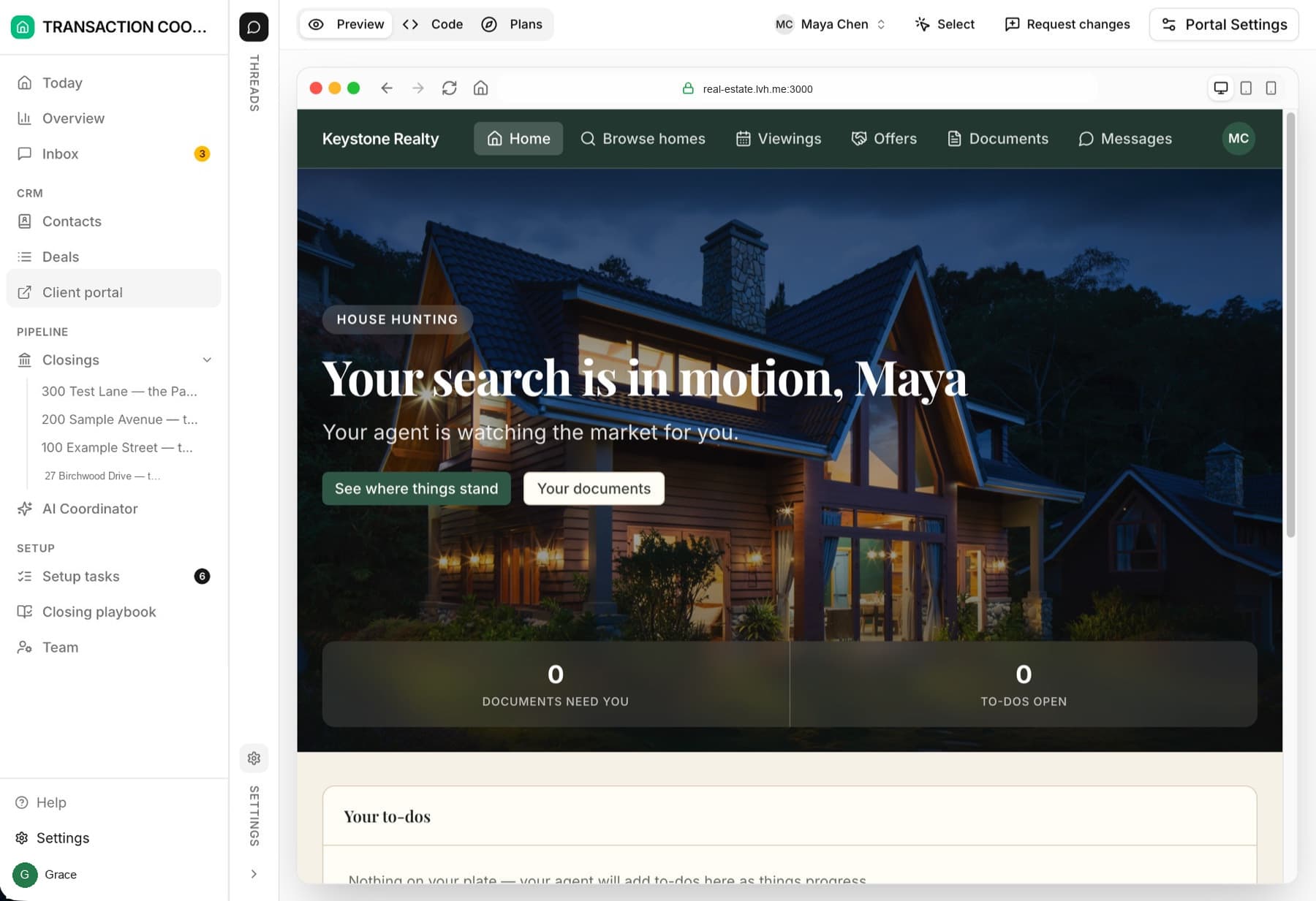
The contract. Open a closing in DeedSpring by uploading the executed contract and it reads the price, deposits, contingencies and dates into deadlines on the file. The AI coordinator checks every active file every hour, flags what is slipping and drafts the chases and client updates for you to send, with anything sensitive or negotiable always waiting for a person. Your buyers and sellers get a portal that shows where their closing stands, so the question of whether it is still pending gets answered from the file. The MLS check itself can sit on the playbook as a dated task with an owner, timed to your MLS's reporting deadline.
Starter is $15 a month for one closing a month. Standard is $25 a closing, less at volume, with unlimited agents and teammates and unused closings rolling over. Both are month to month.