
Template · Listing and closing workflows
Listing intake checklist for agents and coordinators
Thirty-five things to capture before a listing goes live, in five groups with the conditional ones marked: who owns and signs, the listing-agreement terms, the MLS inputs and marketing consents, the disclosures the home triggers, and the payoff and approvals. For listing agents and coordinators.
Who needs the intake, and what for?
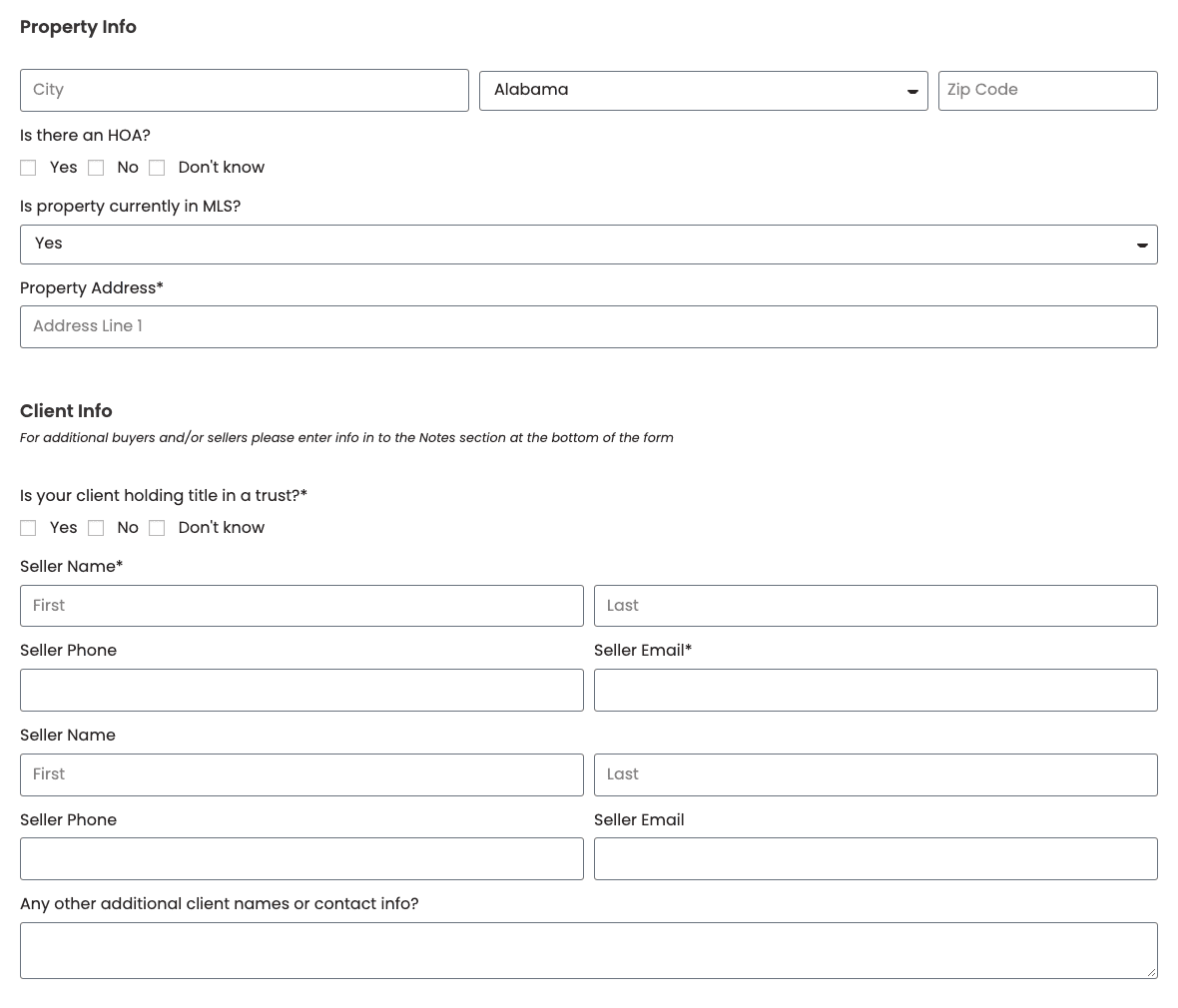
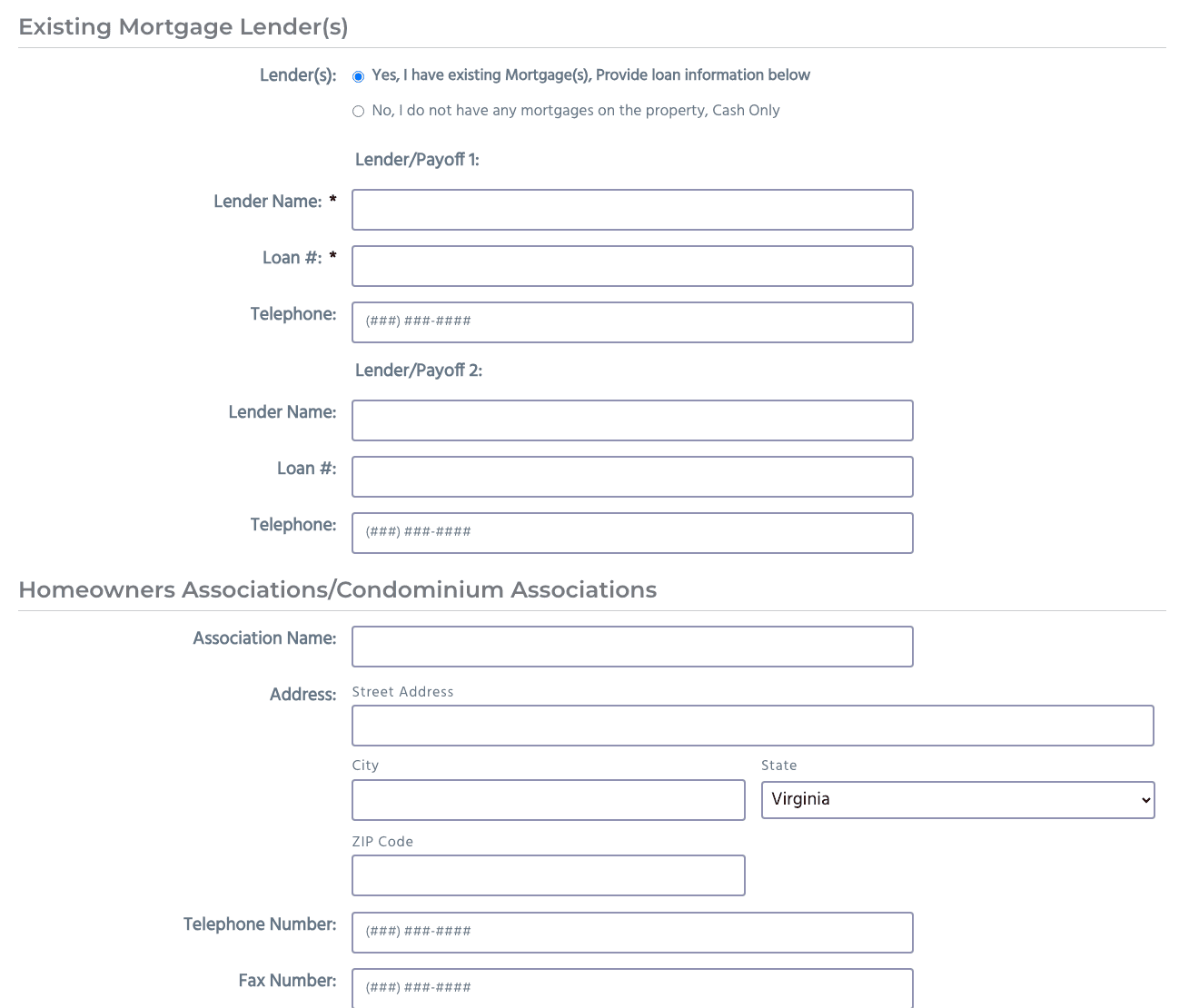
Three forms you will fill in later decide what the intake has to collect. The listing agreement comes first. Wisconsin's state-approved WB-1 has the seller and firm fill in the property, what stays and what goes, the list price, the commission and any compensation to others, a multiple-representation choice, the term, and the seller's delivery address and email. Then the MLS input sheet. The CRMLS residential form marks required fields with one asterisk and conditionally required fields with two, down to the lockbox type and whether the address may show on the internet. Last, the title company's seller sheet. Highland Title's seller sheet asks how each seller holds title, requires a lender name and loan number for the first mortgage and has a block for a second.
Coordination services have already turned this into intake forms. CTC Transaction Services marks these required on its listing intake: the agent's name and email, who pays the TC fee, the property address, whether the client holds title in a trust, the seller's name and email, and both commission fields. JG Coordinating wants its listing intake at least two business days before the listing goes live. The checklist below is what those forms would ask if they also had to satisfy the listing agreement, the MLS and the title company.
The listing intake checklist
Work the groups in order. An item that starts with If applies only when an earlier answer makes it apply. Form references are to WB-1, CRMLS and the Northwest Arkansas input sheet. Swap in your own.
1. The seller and the title
- Every owner on the deed, names spelled as the deed has them, and which of them will signWB-1 has four seller signature lines and an entity line with an authorized signer's name and title. The title company will ask whether each seller is an individual, a trustee or a company.
- If title is in a trust, LLC or estate: the trust pages or entity papers that name who can signOne coordination service makes the trust question required before it opens a listing file. One title company says it will need corporate documents for a company seller.
- Each seller's email, mobile number and the address where notices are deliveredWB-1 carries a delivery address and an email address for the seller, and says a consumer giving an email has first consented electronically as federal law requires.
- What the seller wants kept confidential, in writingWB-1 gives the seller lines for confidential information and separate lines for what the firm may disclose.
- Who lives there now: owner, tenant or vacantCRMLS requires an occupant type and a showing contact, and bans the words vacant and occupied from the public remarks.
- If tenant-occupied: each lease, its end date, the deposits and any prepaid rentWB-1 has the seller assign leases that run past closing and transfer security deposits and prepaid rents to the buyer.
- If a prior listing just ended: the written list of protected buyers, due within seven daysWB-1 excludes buyers protected under a prior listing contract and has the seller deliver the list within seven days of the listing date.
- Any firm, agent or buyer the seller will not allow in, and any offer terms not to presentWB-1 asks for these on its cooperation lines and warns that limiting cooperation may reduce marketability.
2. The listing agreement
- Street address, municipality and county, plus the parcel number and legal descriptionWB-1 takes the address and county on its first lines. Both MLS sheets require a parcel number, and the Arkansas sheet a legal description.
- List priceOne line on WB-1 and a required field on both input sheets.
- What stays, what goes, and anything rentedWB-1 lists included and excluded items and tells the seller to name fixtures that are rented, such as a water softener or a propane tank.
- Term: the start date and the end dateWB-1 runs from a day to midnight on a day. CRMLS requires the listing contract date and expiration date, Arkansas the list date and expire date.
- The firm's commission, and any compensation to others the seller approvesTwo separate WB-1 sections, with the form's own note that there is no standard market rate and commissions are fully negotiable. One coordination service makes both of its commission fields required.
- Concessions the seller will let the firm advertiseWB-1 has lines for concessions, incentives or special financing, separate from compensation to others. CRMLS asks Seller Consider Concessions, yes or no.
- The seller's multiple-representation choiceWB-1 says check only one of three: designated agency, a neutral firm, or no multiple representation.
- If the firm is not full service: entry only or limited serviceCRMLS requires a listing service type. Arkansas requires an agency and listing type.
- If anything was added by hand: the addenda, namedWB-1's addenda lines make the attached addenda part of the listing.
3. Marketing consents and MLS inputs
- The seller's marketing choice: public from day one, delayed, or office exclusiveUnder NAR's 2025 policy a seller may delay marketing through IDX and syndication for the period the local MLS allows, or file an office exclusive that the MLS does not disseminate.
- If delayed or office exclusive: the seller's signed disclosure, required to file the exempt listingNAR requires a certification from the seller covering the relationship, the MLS benefits being waived or delayed, and the seller's decision.
- The four internet answers: whole listing, address, consumer comments, automated valuationsCRMLS requires all four and needs the seller's written authorization before any of them is No. Arkansas requires address display, internet, VOW and blogging answers.
- Sign, lockbox and showing rulesCRMLS requires showing instructions, lockbox location and lockbox type, asks whether a sign goes on the property, and keeps gate codes and lockbox combinations out of the public remarks.
- Year built, living area and lot size, each with its sourceCRMLS requires the figure and the source for all three. Arkansas requires heated square feet with a source and the approximate year built.
- Beds, baths, garage spaces, taxes and subdivisionRequired on one or both sheets. Arkansas requires the taxes amount and the subdivision.
- If there is an association: fee and frequency, name, phone and management companyCRMLS makes HOA yes or no required and those four fields conditionally required. One agent on r/realtors pulls the association documents before entering the MLS, so the entry is right and not the seller's guess.
- If coming soon: the date showings startCRMLS requires it only for a Coming Soon listing fewer than 21 days out.
The marketing choice is the newest item on the list. NAR's Multiple Listing Options for Sellers policy took effect on March 25, 2025, with MLSs given until September 30, 2025 to implement it. Under the Clear Cooperation model rule, a yard sign, a window flyer or an email blast is public marketing, and the listing goes to the MLS within one business day of it. So the seller decides before the sign goes up, and if the answer is anything other than public now, the exempt listing cannot be filed without the signed disclosure.
4. Disclosures the home triggers
- The state seller's disclosure, completed and signed nowIn Texas a seller of a one-dwelling home owes the buyer the notice on or before the contract's effective date, and a buyer who did not get it may terminate for any reason within seven days of receiving it. TREC's current form is 55-1, effective May 28, 2026. WB-1 has the seller agree to complete the real estate condition report and lets the firm distribute it.
- If built before 1978: the lead-based paint disclosure, the EPA pamphlet and the Lead Warning StatementFederal rule, due before the buyer signs a contract, with a 10-day inspection window for the buyer. EPA says agents must inform sellers of their obligations and share responsibility for compliance.
- If there is an association: its documents, and whether it must approve anything before the home is marketedSome communities require written association approval before a unit goes on the market, and some associations will not release documents until the home is under contract.
The association item catches people out because the documents do not always come when you ask. One reply to a new listing agent on r/realtors put it plainly.
“Some HOAs won't allow the docs to be shared before the property goes under contract.”
Ask on day one what the association will release, to whom, and whether it has to approve anything before the listing is marketed. The disclosure itself is the other clock. In Texas the seller's disclosure on a one-dwelling home is due on or before the contract's effective date. Get it signed at intake, so it is ready when the first offer comes in. TREC's form 55-1 records the seller's knowledge as of the date they sign it. For most homes built before 1978 the federal lead rule adds the pamphlet, the warning statement and the disclosure, all before a buyer signs.
5. Money and approvals
- Every lender on the property, with loan number and phone, including a second mortgageOne title company's seller sheet requires the lender name and loan number for the first mortgage and gives a second payoff block. Cash only is its own answer.
- The association's name, address and phone, as title will ask for themThe same sheet has an association block and a second for an additional association.
- Who pays the coordinator's feeRequired on a coordination service's intake: the agent or the seller. Delete it in-house.
- If the seller has chosen one: the title company or closing attorneyThe coordination service's intake asks for the title rep if one is already on the file. The title company's sheet wants the listing agent's name and email and a projected closing date.
- The launch date, and the intake deadline counted back from itJG Coordinating requires the listing intake at least two business days before the listing goes live, and prepares the exclusive-right-to-sell agreement for many of its agents.
- Who signs off the MLS entry before it goes liveCRMLS's input form is signed by the agent and the seller, with a line for the broker or participant, and the seller initials every page.
- What never goes on the intake: Social Security numbers and dates of birthThe title company collects the SSN on its own Secure Seller Information Sheet, which it says is transmitted securely. Leave it there.
Where does the intake go once it is filled in?
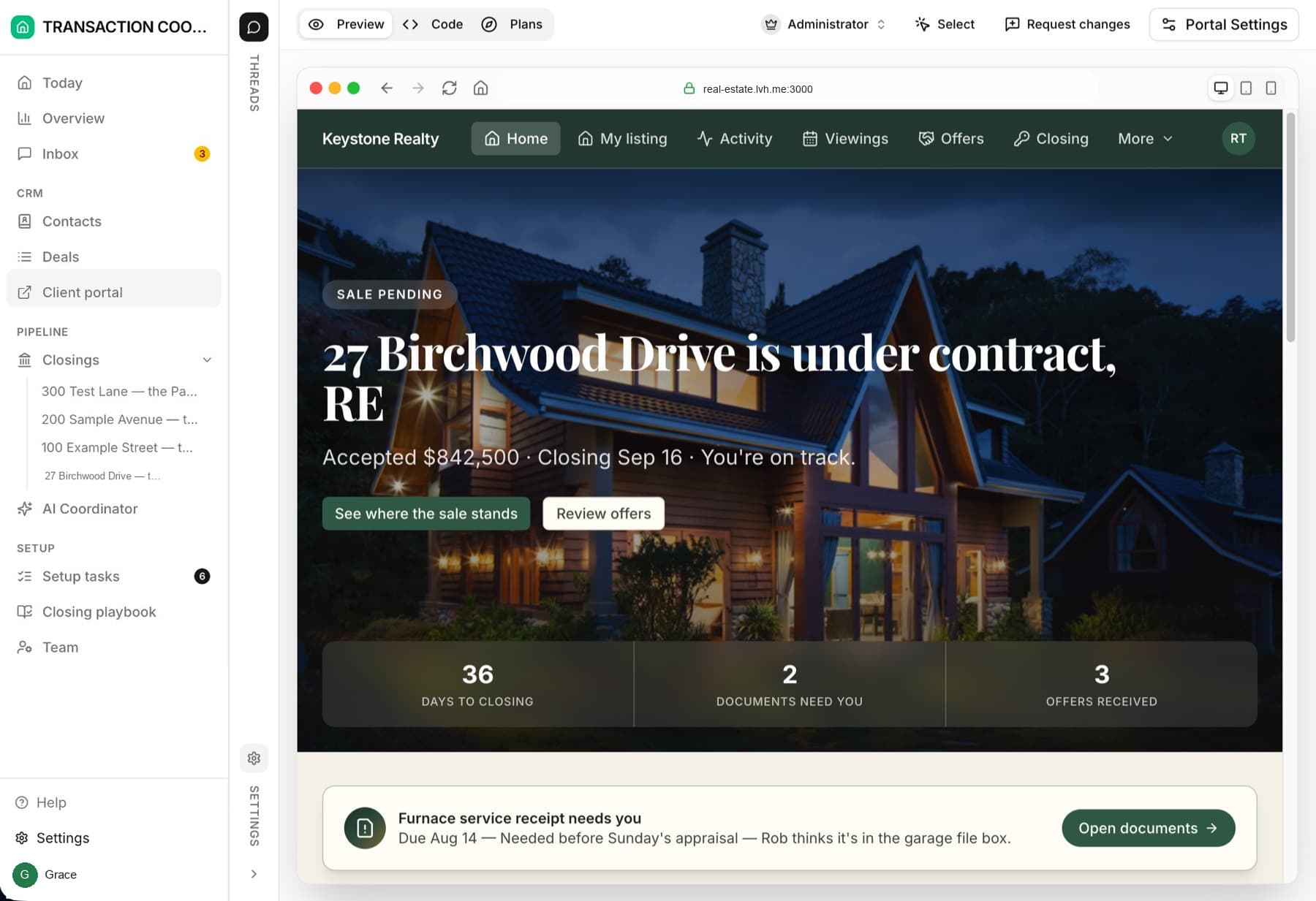
Into one file, where disclosures and payoff stop being answers and become tasks with owners and dates. In DeedSpring that file starts as a seller-side deal, which holds the seller contacts, the property and the documents you collect before a contract exists, the listing agreement and the disclosures among them. The seller's contact, with an email, the Seller role and a place on the deal, is what opens their portal. When the listing goes under contract, the Sell side toggle picks the sell-side playbook, and a listing arrives with disclosures and payoff already on the chain, each task counted from the contract or closing date and naming who does it: Deal owner, Client, External party or AI.
What does a completed intake look like?
Demonstration: a Wisconsin listing on WB-1
Placeholder data, not a real file. [SELLER_A] and [SELLER_B] sign as trustees, so the trust certificate is attached. Owner-occupied, nothing confidential, no prior listing. Address, county and parcel number on the first lines, a 180-day term, a rented water softener excluded, one concession the firm may advertise, designated agency checked. Public marketing from day one, so no exempt-listing disclosure, and all four internet answers yes. Supra lockbox, showings by appointment, sign yes. Built in 1962 per the assessor, so the lead pamphlet, warning statement and disclosure go in the file. An association, so its fee and manager come from its website and its documents are requested. The condition report is signed. One mortgage with its loan number. In-house, so the fee line is deleted. Launch in ten days, intake complete eight days before it.
How do you adapt it?
Three things change the list. Your state's listing agreement: the line references here are Wisconsin's because its state-approved listing contract is public, so open your association's form and map group 2 to its paragraphs. Your disclosure law: the Texas timing and TREC 55-1 are examples, so replace them with your state's notice and the date it is due, and keep the lead item wherever you are. Your MLS: pull the current input sheet and copy every single-asterisk field into group 3 and every double-asterisk field as an If item. The Arkansas sheet marks its own required list the same way. If you run a coordination business, keep the fee-payer item and add your intake deadline. Build the If items as conditionals where your form tool allows, so a cash seller never sees a loan-number field.
For seller items a city adds, our Los Angeles page lists the city report and retrofit items, and the Detroit page covers the suburbs that want a certificate before closing.
What does DeedSpring do with the intake?
It keeps the listing and the closing in one place and shows the seller where they stand. The seller-side deal holds the contacts, the property and every document from the intake. Put the seller on it as a Seller with their email and that opens their portal: the listing, its activity, showings and offers, and once under contract the closing timeline written for sellers. Open the closing on the Sell side and the playbook puts disclosures and payoff on the chain with owners and dates, with the executed contract read for the property, parties and dates for you to confirm.
Starter is $15 a month for one closing a month. Standard is $25 a closing, less at volume, with unlimited agents and teammates and unused closings rolling over. Both are month to month, on the pricing page.